How Much Can I Make on Social Security in 2018
Did You Know That…
67.0 million people received benefits from programs administered by the Social Security Assistants (SSA) in 2017.
5.5 million people were newly awarded Social Security benefits in 2017.
55% of developed Social Security beneficiaries in 2017 were women.
54.5 was the average historic period of disabled-worker beneficiaries in 2017.
86% of Supplemental Security Income (SSI) recipients received payments considering of disability or incomprehension in 2017.
General Information
| Program | Employee | Employer | Cocky-employed |
|---|---|---|---|
| Total | 7.65 | vii.65 | 15.30 |
| OASI | five.015 | 5.015 | ten.03 |
| DI | 1.185 | ane.185 | 2.37 |
| HI | a 1.45 | 1.45 | a two.90 |
| a. Earned income exceeding $200,000 for individual filers and $250,000 for married couples filing jointly is subject to an additional HI tax of 0.xc percent. | |||
| Blazon of earner | OASI | DI | Hullo |
|---|---|---|---|
| Average | 2,603 | 615 | 752 |
| Maximum | 6,439 | 1,522 | No limit |
| Self-employed maximum | 12,879 | three,043 | No limit |
| Program | Corporeality |
|---|---|
| OASDI | 128,400 |
| HI | No limit |
Earnings required for work credits, 2018: $1,320 for one work credit (i quarter of coverage)
NOTE: A worker may earn a maximum of four credits a year. Doing then in 2018, therefore, requires $5,280 in earnings.
| Calendar year | Total | OASI | DI |
|---|---|---|---|
| 2016 | 4.89 | 4.thirteen | 0.77 |
| 2017 | iv.86 | 4.12 | 0.74 |
| NOTES: Figures are subject to change. | |||
| Totals do not necessarily equal the sum of rounded components. | |||
Toll-of-living adjustment, 2018: 2.00%
| Year of nascency | Full retirement age (FRA) |
|---|---|
| 1937 and earlier | 65 |
| 1938 | 65 and 2 months |
| 1939 | 65 and 4 months |
| 1940 | 65 and 6 months |
| 1941 | 65 and 8 months |
| 1942 | 65 and 10 months |
| 1943–1954 | 66 |
| 1955 | 66 and two months |
| 1956 | 66 and 4 months |
| 1957 | 66 and 6 months |
| 1958 | 66 and eight months |
| 1959 | 66 and ten months |
| 1960 and later | 67 |
Maximum monthly Social Security benefit: $two,788 for workers retiring at FRA in 2018
Note: Higher benefits are possible for those who piece of work or delay benefit receipt after reaching FRA.
Do good formula bend points (for workers with first eligibility in 2018):
Master insurance corporeality (PIA) equals
xc% of the start $895 of boilerplate indexed monthly earnings (AIME), plus
32% of AIME over $895 through $5,397, plus
15% of AIME over $5,397
| Year | Dollars | Increase from previous twelvemonth (in percent) |
|---|---|---|
| 2016 | 48,642.xv | 1.1 |
| 2017 (estimated) | fifty,020.69 | 2.8 |
| 2018 (estimated) | 51,894.47 | 3.7 |
| Age of retired person in 2018 | Annually | Monthly |
|---|---|---|
| Nether FRA ($1 for $2 withholding rate) | 17,040 | one,420 |
| FRA ($1 for $3 withholding rate)a | 45,360 | 3,780 |
| Above FRA | No limit | No limit |
| NOTE: Retired-worker beneficiaries younger than FRA have some of their benefit withheld if they take earnings above the exempt amounts. | ||
| a. The test applies merely to earnings made in months prior to the calendar month of attainment of FRA. | ||
| Program attribute | Private | Couple |
|---|---|---|
| Federal benefit rate | 750 | one,125 |
| Resource limit | 2,000 | 3,000 |
| Determinant | Monthly amount |
|---|---|
| Substantial gainful activity | |
| For nonblind persons | 1,180 |
| For blind persons | 1,970 |
| Trial piece of work period | 850 |
| Calendar yr and trust fund | Income | Outgo | Fund at end of year |
|---|---|---|---|
| 2017 (actual) | |||
| Total | 996.6 | 952.five | ii,891.8 |
| OASI | 825.6 | 806.7 | 2,820.3 |
| DI | 171.0 | 145.8 | 71.v |
| 2018 (estimated) | |||
| Total | i,001.ane | 1,002.8 | 2,890.1 |
| OASI | 828.viii | 853.6 | ii,794.ix |
| DI | 172.9 | 149.3 | 95.2 |
| Notation: Totals practise not necessarily equal the sum of rounded components. | |||
| Family unit of measurement | Corporeality |
|---|---|
| Aged individual | 11,756 |
| Family unit of two, anile head | fourteen,816 |
| Family of four | 25,696 |
| SOURCE: U.S. Census Bureau equally of Jan 2018 (preliminary estimates). | |
OASDI authoritative expenses: Costs were 0.vii% of contributions in calendar year 2017
| Type of filing | Number |
|---|---|
| OASI claims | 5.six |
| DI claims | 2.5 |
| SSI applications | i.9 |
Income of the Aged Population
We are suspending publication of the five charts that plant the Income of the Aged Population section for the 2022 edition of Fast Facts and Figures as nosotros evaluate the adequacy of the charts' data source, the Annual Social and Economic Supplement (as well known as the March Supplement) of the Current Population Survey (CPS). Contempo research suggests that there may exist some problems with the measurement of certain sources of income reported in the CPS. We are defended to publishing the most accurate statistics possible so we are conducting a thorough review of available data sources for these publications and will publish findings from this review. For more information, come across Bee, Adam and Joshua W. Mitchell. 2017. "Do Older Americans Accept More than Income Than Nosotros Retrieve?" SEHSD Working Newspaper No. 2017-39. Washington, DC: U.S. Demography Bureau.
OASDI Program
Earnings in Covered Employment, 1937–2017
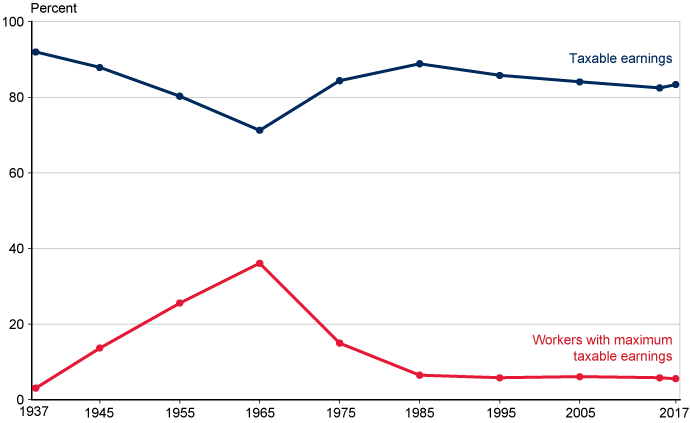
People contribute to Social Security through payroll taxes or self-employment taxes, as required by the Federal Insurance Contributions Act (FICA) and the Self-Employment Contributions Act (SECA). The maximum taxable amount is updated annually on the footing of increases in the average wage. Of the 174 meg workers with earnings in Social Security–covered employment in 2017, nearly half dozen% had earnings that equaled or exceeded the maximum amount discipline to taxes, compared with iii% when the program began and a peak of 36% in 1965. About 83% of earnings in covered employment were taxable in 2017, compared with 92% in 1937.
Taxable earnings every bit a percentage of earnings in covered employment and pct of workers with maximum taxable earnings, selected years
SOURCE: SSA, Office of the Chief Actuary.
Insured Status, 1970–2017
The percentage of persons aged 20 or older who are insured for benefits has inverse very niggling in recent years. To be fully insured, a worker must have at least 1 work credit (quarter of coverage) for each yr elapsed after age 21 (but no earlier than 1950) and before the year in which he or she attains historic period 62, becomes disabled, or dies. The maximum number of work credits needed to exist fully insured is 40. An private is said to exist permanently insured if he or she has earned 40 work credits. To be insured for disability, the worker must exist fully insured and accept at least 20 work credits during the last 40 calendar quarters. (Requirements for inability-insured status are somewhat different for persons younger than age 31.) Disability benefits are available upward to FRA.
| Yr | Population aged 20 or older | Population aged 20 to FRAa | |||
|---|---|---|---|---|---|
| Millions | Percentage permanently insured | Percentage fully insured | Millions | Per centum insured for inability | |
| 1970 | 135.0 | 50 | 77 | 113.9 | 63 |
| 1975 | 147.3 | 51 | 81 | 123.7 | 66 |
| 1980 | 161.8 | 53 | 83 | 135.2 | 70 |
| 1985 | 174.9 | 58 | 84 | 145.5 | 72 |
| 1990 | 185.nine | 63 | 86 | 153.7 | 75 |
| 1995 | 196.0 | 66 | 86 | 161.5 | 76 |
| 2000 | 206.ix | 68 | 87 | 171.3 | 78 |
| 2005 | 219.seven | 68 | 87 | 183.five | 77 |
| 2010 | 230.7 | 69 | 87 | 191.9 | 76 |
| 2015 | 242.1 | seventy | 88 | 197.one | 76 |
| 2016 | 244.8 | 70 | 88 | 198.iii | 76 |
| 2017 | 247.4 | 70 | 88 | 199.4 | 76 |
| SOURCE: SSA, Office of the Chief Actuary. | |||||
| NOTES: The population in the Social Security area includes residents of the l states and the Commune of Columbia adjusted for net census undercount; noncombatant residents of American Samoa, Guam, Northern Mariana Islands, Puerto Rico, and U.Southward. Virgin Islands; federal civilian employees and persons in the U.S. military machine abroad and their dependents; noncitizens living away who are insured for Social Security benefits; and all other U.S. citizens abroad. | |||||
| Figures are subject to revision. | |||||
| a. Insured for disability excludes those who have reached FRA. | |||||
Insured Condition, past Sex activity, 1970 and 2017
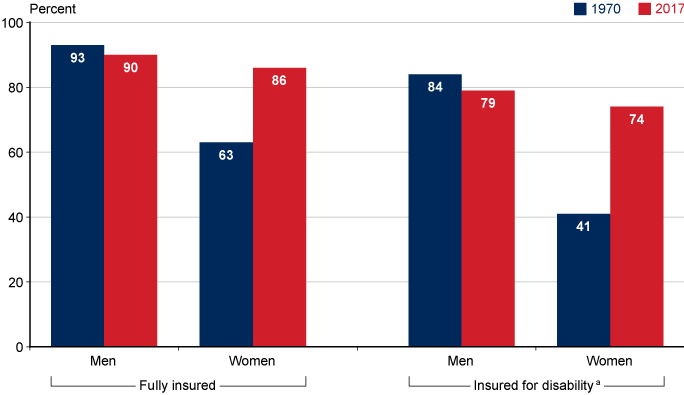
Although men historically were more likely than women to be insured, the gender gap is shrinking. The proportion of men who are insured declined slightly from 1970 to 2017, with 90% fully insured and 79% insured for disability in 2017. By contrast, the proportion of women who are insured increased dramatically—from 63% to 86% fully insured and from 41% to 74% insured for disability.
Per centum of population in the Social Security area fully insured and insured for disability benefits, by sex
SOURCE: SSA, Role of the Chief Actuary.
NOTES: The population in the Social Security area includes residents of the 50 states and the District of Columbia adapted for net demography undercount; civilian residents of American Samoa, Guam, Northern Mariana Islands, Puerto Rico, and U.S. Virgin Islands; federal civilian employees and persons in the U.S. armed forces abroad and their dependents; noncitizens living abroad who are insured for Social Security benefits; and all other U.S. citizens abroad.
Figures are subject to revision.
a. Insured for disability excludes those who have reached FRA.
New Do good Awards, 2017
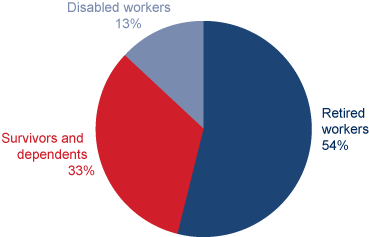
Benefits were awarded to nigh v.5 million persons; of those, 54% were retired workers and thirteen% were disabled workers. The remaining 33% were survivors or the spouses and children of retired or disabled workers. These awards correspond non only new entrants to the benefit rolls but also persons already on the rolls who become entitled to a different benefit, particularly conversions of disabled-worker benefits to retired-worker benefits at FRA.
| Beneficiary | Number (thousands) | Per centum |
|---|---|---|
| Total | 5,520 | 100 |
| Retired workers and dependents | three,530 | 64 |
| Workers | two,975 | 54 |
| Spouses and children | 555 | 10 |
| Disabled workers and dependents | 1,093 | 20 |
| Workers | 716 | xiii |
| Spouses and children | 377 | seven |
| Survivors of deceased workers | 897 | 16 |
New awards
SOURCE: SSA, Primary Beneficiary Tape, 100 percent information.
New Awards to Workers, 1977–2017
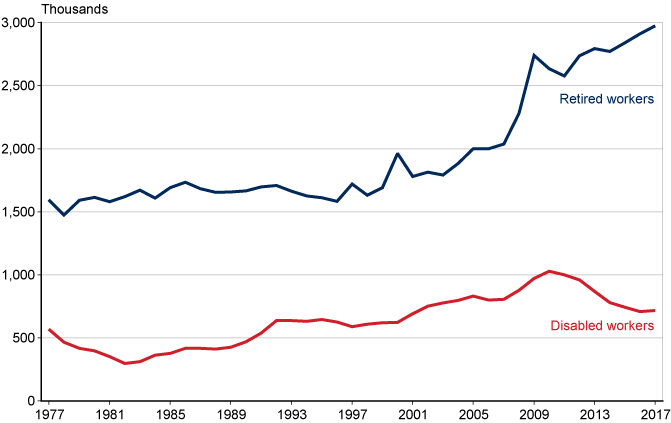
Awards to retired workers increased considerably over the past 4 decades, at a rate that nearly triples the rate by which awards to disabled workers increased. The annualized rate of increase over the menstruum from 1977 to 2022 is 1.six% for retired workers and 0.six% for disabled workers. The almanac number of awards to retired workers rose from 1.6 million in 1977 to 3.0 million in 2017, while for disabled workers it increased from 569,000 in 1977 to 716,000 in 2017.
New awards to retired and disabled workers
SOURCE: SSA, Master Casher Record, 100 pct data.
Beneficiaries in Electric current-Payment Status, December 2017
Sixty-2 million beneficiaries were in current-payment status; that is, they were being paid a benefit. Sixty-ix pct of those beneficiaries were retired workers and 14% were disabled workers. The remaining 17% of beneficiaries were survivors or the spouses and children of retired or disabled workers.
| Beneficiary | Number (thousands) | Percent |
|---|---|---|
| Total | 61,903 | 100 |
| Retired workers and dependents | 45,498 | 73 |
| Workers | 42,447 | 69 |
| Spouses and children | 3,051 | 5 |
| Disabled workers and dependents | ten,411 | 17 |
| Workers | eight,695 | 14 |
| Spouses and children | one,716 | 3 |
| Survivors of deceased workers | 5,994 | 10 |
Beneficiaries, by type
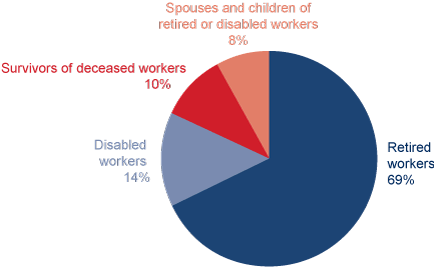
SOURCE: SSA, Master Beneficiary Tape, 100 per centum information.
Totals exercise not necessarily equal the sum of rounded components.
Boilerplate Do good Amounts, 2017
Benefits payable to workers who retire at FRA and to disabled workers are equal to 100% of the PIA (subject to any applicable deductions). At FRA, widow(er)s' benefits are as well payable at 100% of the insured worker'south PIA. Nondisabled widow(er)south can receive reduced benefits at age sixty. Disabled widow(er)s can receive reduced benefits at age 50. Spouses, children, and parents receive a smaller proportion of the worker's PIA than do widow(er)s.
| Beneficiary | New awards | Benefits in current-payment status, December |
|---|---|---|
| Retired workers | 1,460 | i,404 |
| Spouses | 627 | 732 |
| Children | 634 | 675 |
| Disabled workers | ane,328 | 1,197 |
| Spouses | 382 | 335 |
| Children | 363 | 366 |
| Survivors of deceased workers | ||
| Nondisabled widow(er)southward | one,037 | 1,338 |
| Disabled widow(er)s | 725 | 729 |
| Widowed mothers and fathers | 963 | 975 |
| Surviving children | 857 | 858 |
| Parents | 1,103 | ane,186 |
| SOURCE: SSA, Master Beneficiary Record, 100 percentage data. | ||
Beneficiaries, by Historic period, December 2017
About four-fifths of all OASDI beneficiaries in current-payment status were aged 62 or older, including 23% anile75–84 and 9% aged 85 or older. About 13% were persons anileeighteen–61 receiving benefits as disabled workers, survivors, or dependents. Another five% were children under age xviii.
Beneficiaries, by age
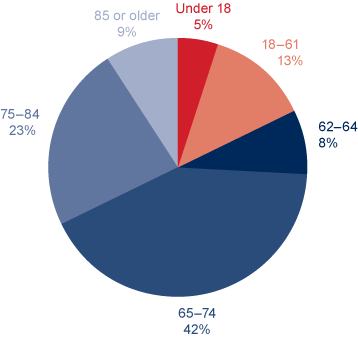
SOURCE: SSA, Master Casher Record, 100 percent data.
Age of Disabled and Retired Workers, 1960–2017
The average age of disabled-worker beneficiaries in current-payment condition declined betwixt 1960, when DI benefits kickoff became available to persons younger than age 50, and 2017. In 1960, the average age of a disabled worker was 57.ii years. The rapid driblet in average age in the following years reflects a growing number of awards to workers under l. By 1995, the average age barbarous to a low of 49.8, but by 2017, information technology rose to 54.v. By contrast, the boilerplate age of retired workers has changed little over fourth dimension, rising from 72.4 in 1960 to 73.8 in 2017.
Boilerplate age of disabled-worker and retired-worker beneficiaries, selected years
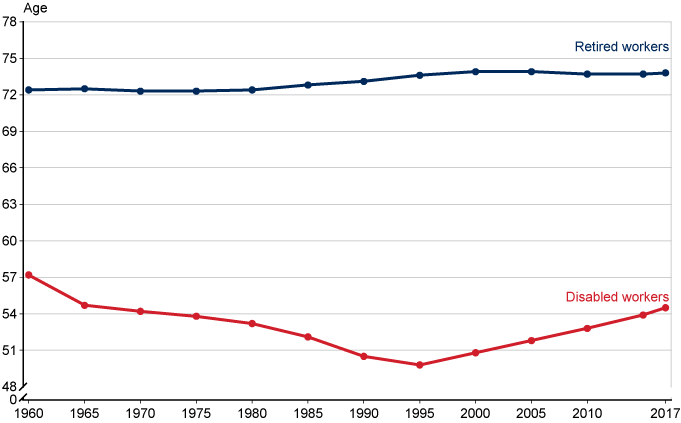
SOURCE: SSA, Master Beneficiary Record, 10 per centum sample for 1990–2005 and 100 percent data for all other years.
Beneficiaries, by Sex, Dec 2017
Of all adults receiving monthly Social Security benefits, 45% were men and 55% were women. Lxxx-two per centum of the men and 67% of the women received retired-worker benefits. Twelve percent of the women received survivor benefits.
Developed beneficiaries, by type of beneficiary and sex (in percent)
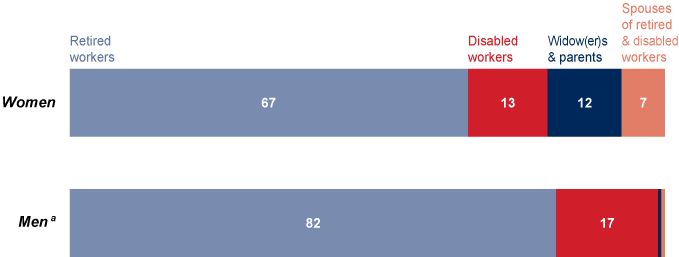
SOURCE: SSA, Chief Casher Tape, 100 percent information.
NOTE: Totals practice not necessarily equal the sum of rounded components.
a. Less than i percent of men received benefits as survivors (widowers or fathers) or as spouses of retired and disabled workers.
Average Monthly Benefit, by Sex, December 2017
Among retired and disabled workers who collected benefits based on their own work records, men received a higher average monthly do good than did women. For those with benefits based on another person'due south work tape (spouses and survivors), women by and large had higher average benefits.
| Beneficiary | Men | Women |
|---|---|---|
| Workers | ||
| Retired | 1,565 | i,244 |
| Disabled | 1,320 | 1,069 |
| Spouses of— | ||
| Retired workers | 614 | 740 |
| Disabled workers | 360 | 333 |
| Survivors of deceased workers | ||
| Nondisabled widow(er)s | 1,179 | 1,344 |
| Disabled widow(er)south | 545 | 745 |
| Mothers and fathers | 841 | 987 |
| SOURCE: SSA, Master Beneficiary Record, 100 per centum information. | ||
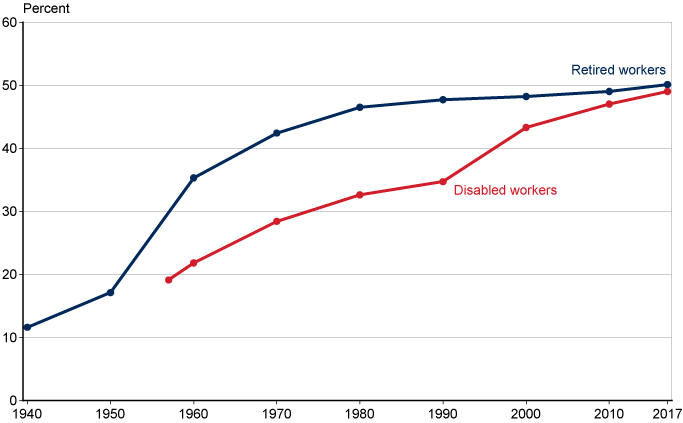
Women Beneficiaries, 1940–2017
The proportion of women amidst retired-worker beneficiaries quadrupled between 1940 and 2017. The percentage climbed from 12% in 1940 to 47% in 1980, 48% in 1990, and l% in 2017. The proportion of women among disabled-worker beneficiaries more than doubled between 1957, when DI benefits first became payable, and 2017. The percentage rose steadily from 19% in 1957 to 35% in 1990 and 49% in 2017.
Women as a pct of retired-worker and disabled-worker beneficiaries, selected years
SOURCE: SSA, Chief Casher Record, 100 pct data.
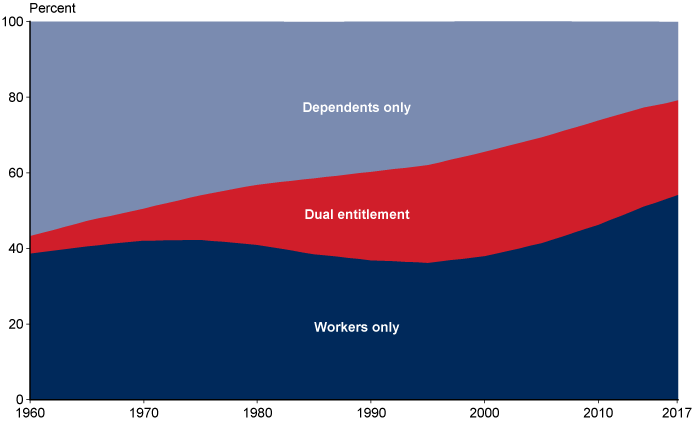
Women with Dual Entitlement, 1960–2017
The proportion of women anile 62 or older who are receiving benefits as dependents (that is, on the footing of their husbands' earnings record merely) declined from 57% in 1960 to 21% in 2017. At the same fourth dimension, the proportion of women with dual entitlement (that is, paid on the ground of both their own earnings records and those of their husbands) increased from 5% in 1960 to 25% in 2017.
Women aged 62 or older, by footing of entitlement, selected years
SOURCE: SSA, Primary Beneficiary Record. All information for 2005 and dual entitlement data for 1995 and 2000 are based on a x pct sample. All other years are 100 percentage data.
Child Beneficiaries, December 2017
More than 3.1 one thousand thousand children under age 18 and students aged18–19 received OASDI benefits. Children of deceased workers had the highest average payments, in office considering they are eligible to receive monthly benefits based on 75% of the worker'south PIA, compared with 50% for children of retired or disabled workers. Overall, the boilerplate monthly benefit amount for children was $590.
Number of and average monthly benefit for children of worker beneficiaries
SOURCE: SSA, Master Beneficiary Record, 100 per centum data.
SSI Program
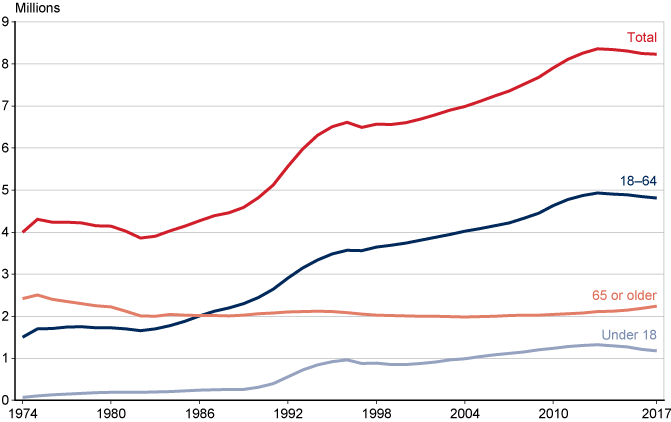
Number of Recipients, 1974–2017
The Supplemental Security Income (SSI) program provides income support to needy persons aged 65 or older, blind or disabled adults, and blind or disabled children. Eligibility requirements and federal payment standards are nationally uniform. SSI replaced the erstwhile federal/state adult assist programs in the fifty states and the District of Columbia.
Payments nether SSI began in January 1974, with 3.two million persons receiving federally administered payments. Past December 1974, this number had risen to nigh iv one thousand thousand and remained at about that level until the mid-1980s, and then rose steadily, reaching nearly vi million in 1993 and 7 meg past the end of 2004. As of December 2017, the number of recipients was well-nigh eight.two million. Of this total, 4.eight million were between the ages of 18 and 64, 2.2 one thousand thousand were anile 65 or older, and 1.2 one thousand thousand were nether historic period eighteen.
Persons receiving federally administered SSI payments, December
SOURCE: SSA, Supplemental Security Tape, 100 percentage data.
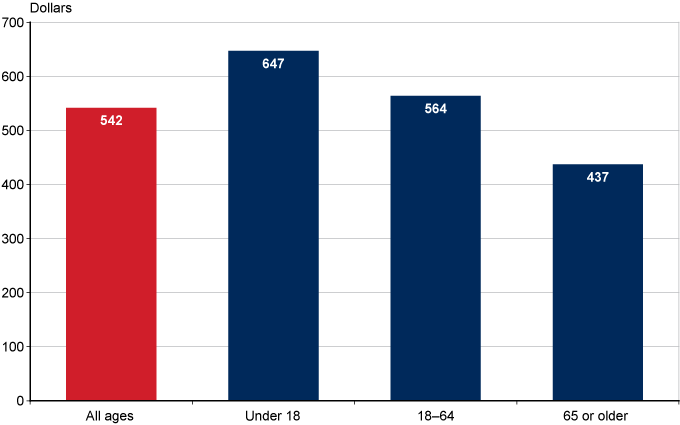
Payment Amounts, by Age, December 2017
The average monthly federally administered SSI payment was $542. Payments varied by historic period group, ranging from an average of $647 for recipients aged under 18 to $437 for those aged 65 or older. The maximum federal benefit rate in December 2017 was $735 for an private and $1,103 for a couple, plus whatsoever applicable land supplementation.
Boilerplate monthly federally administered SSI payment
SOURCE: SSA, Supplemental Security Record, 100 percent data.
Notation: Amounts exclude retroactive payments.
Federally Administered Payments, December 2017
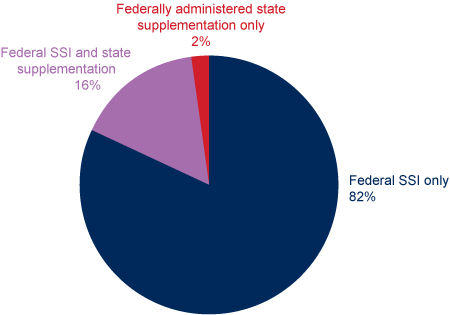
A total of 8.2 million persons received federally administered SSI payments. The majority received federal SSI only. States accept the option of supplementing the federal do good charge per unit and are required to exercise so if that rate is less than the income the recipient would have had nether the quondam country program.
Blazon of SSI payment
SOURCE: SSA, Supplemental Security Tape, 100 per centum data.
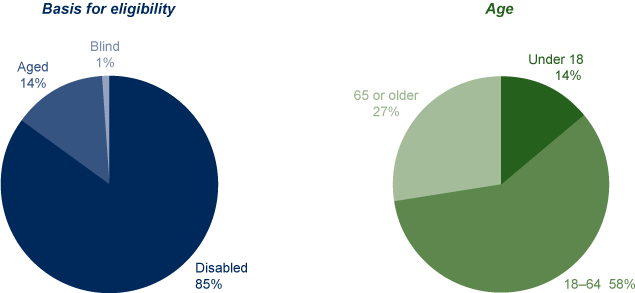
Basis for Eligibility and Age of Recipients, Dec 2017
14 percent of SSI recipients received benefits on the basis of age and the rest qualified on the basis of disability. Twenty-7 percentage of the recipients were aged 65 or older. In the SSI program, a disabled recipient is still classified as "disabled" subsequently reaching historic period 65. In the OASDI program, DI beneficiaries are converted to the retirement program when they attain FRA.
SSI recipients, past basis for eligibility and historic period
SOURCE: SSA, Supplemental Security Record, 100 per centum data.
NOTE: Totals practice not necessarily equal the sum of rounded components.
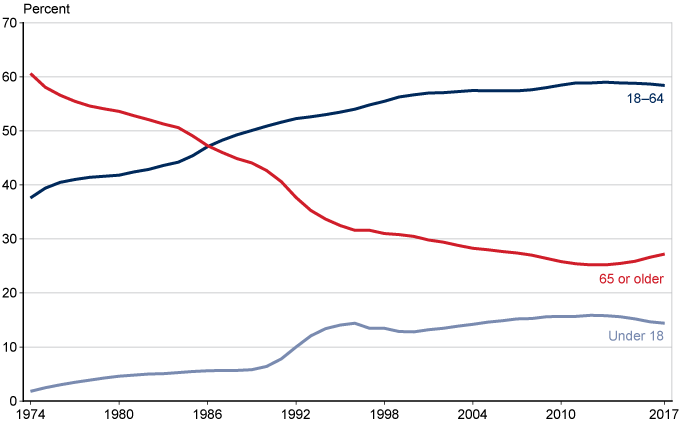
Percentage Distribution of Recipients, past Age, 1974–2017
The proportion of SSI recipients anile 65 or older declined from 61% in January 1974 to 27% in December 2017. The overall long-term growth of the SSI program occurred because of an increase in the number of disabled recipients, near of whom are nether age 65.
Percentage distribution of SSI recipients, by age, December
SOURCE: SSA, Supplemental Security Tape, 100 percent data.
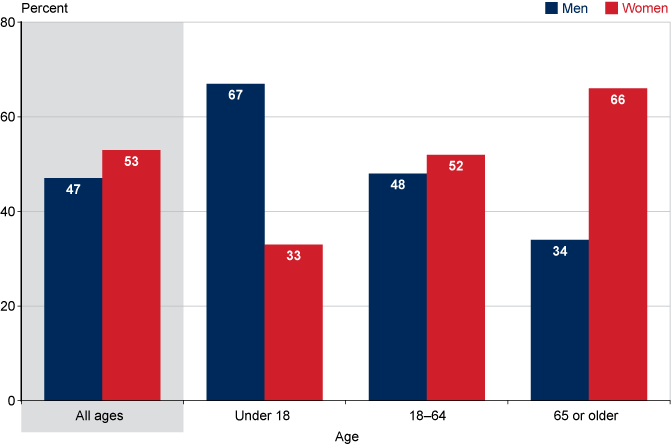
Recipients, by Sex and Age, December 2017
Overall, 53% of the approximately 8.2 million SSI recipients were women, but that per centum varied greatly by age group. Women accounted for 66% of the 2.2 million recipients aged 65 or older, 52% of the 4.viii one thousand thousand recipients agedeighteen–64, and 33% of the 1.2 million recipients under age 18.
SSI recipients, by sexual practice and historic period
SOURCE: SSA, Supplemental Security Record, 100 percent data.
Other Income, December 2017
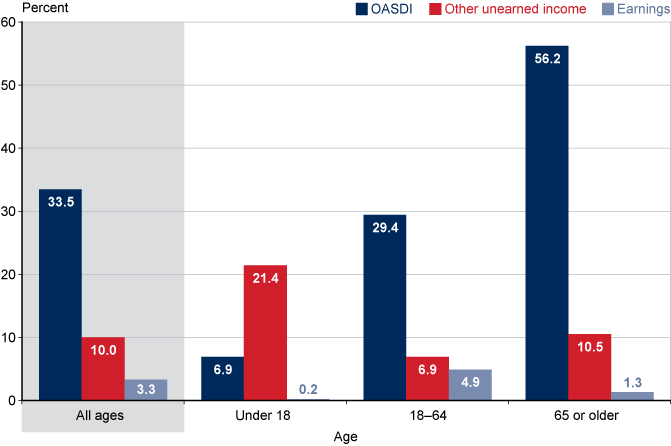
Near 56% of SSI recipients anile 65 or older received OASDI benefits, as did 29.4% of those aged18–64 and 6.9% of those under historic period xviii. Other types of unearned income, such as income from assets, were reported most oftentimes amongst those nether age 18 (21.four%) and those aged 65 or older (10.5%). Earned income was most prevalent (4.9%) among those anile18–64.
Percentage of SSI recipients also receiving other income, by source and age
SOURCE: SSA, Supplemental Security Tape, 100 percent data.
Child Recipients, December1974–2017
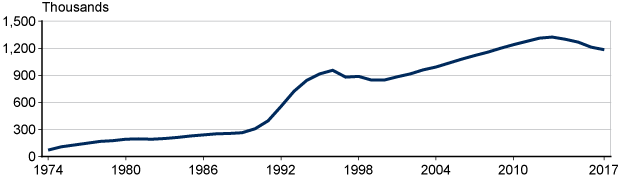
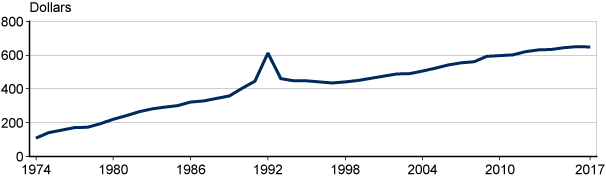
As of December of the program's first year, 1974, lxx,900 bullheaded and disabled children were receiving SSI. That number increased to about 955,000 in 1996, declined to about 847,000 in 2000, and increased to 1,182,593 in 2017. The relatively high average payment to children (compared with payments fabricated to blind and disabled adults) is due in function to a limited amount of other countable income. The spike in average monthly benefits in 1992 is due to retroactive payments resulting from the Sullivan five. Zebley decision. Every bit of December 2017, blind and disabled children were receiving SSI payments averaging $647.
Number of children under historic period eighteen receiving SSI
Average monthly SSI payment to children under age 18a
SOURCE: SSA, Supplemental Security Tape, 100 percentage data.
a. Equally of 1998, these figures exclude retroactive payments.
Cross-Program Beneficiaries
All Beneficiaries, December 2017
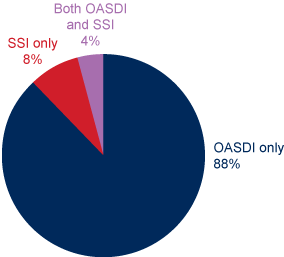
Near 67 meg people received a payment from ane or more programs administered past SSA. Nigh (58.8 million) received OASDI benefits merely, v.5 1000000 received SSI only, and 2.seven million received payments from both programs.
| Do good | Number (thousands) |
|---|---|
| Total (unduplicated) | 66,983 |
| OASDI | 61,494 |
| OASDI only | 58,755 |
| SSI | 8,228 |
| SSI simply | 5,489 |
| Both OASDI and SSI | 2,739 |
Distribution of all beneficiaries
SOURCES: SSA, Principal Beneficiary Record and Supplemental Security Record, 100 percent data.
NOTE: OASDI beneficiaries who are entitled to both a primary and a secondary benefit (dual entitlement) are counted but one time. SSI includes federal SSI payments and federally administered state supplementation.
Beneficiaries Aged 65 or Older, Dec 2017
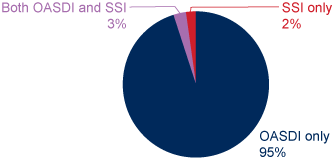
Benefits were paid to 46.vii 1000000 people anile 65 or older. Most 1.3 meg received both OASDI and SSI.
| Beneficiary | Number (thousands) |
|---|---|
| Total (unduplicated) | 46,714 |
| OASDI | 45,727 |
| Retired workers | 39,649 |
| Disabled workers | 512 |
| Spouses | 2,211 |
| Widow(er)s | a iii,260 |
| Disabled adult children | 95 |
| OASDI only | 44,474 |
| SSI | b 2,240 |
| Receiving SSI but | 987 |
| Receiving both OASDI and SSI | one,253 |
Distribution of beneficiaries aged 65 or older, by programme
SOURCES: SSA, Principal Casher Record and Supplemental Security Tape, 100 percent information.
NOTES: OASDI beneficiaries who are entitled to both a primary and a secondary benefit (dual entitlement) are counted only once. SSI includes federal SSI payments and federally administered country supplementation.
a. Includes persons who received dependent parent's benefits or mother's and father's benefits.
b. Includes 1,063,504 SSI beneficiaries aged 65 or older who are disabled or bullheaded.
Disabled Beneficiaries Aged18–64, Dec 2017
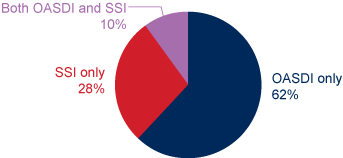
Payments were made to nearly 13 million people aged18–64 on the basis of their ain disability. Lx-two percent received disability payments from the OASDI program only, 28% received payments from the SSI plan only, and 10% received payments from both programs.
| Beneficiary | Number (thousands) |
|---|---|
| Total (unduplicated) | 12,668 |
| OASDI inability | 9,156 |
| Workers aged 64 or younger | 8,167 |
| Disabled adult children | 881 |
| Widow(er)s | 108 |
| OASDI disability only | vii,863 |
| SSI disability | four,805 |
| Receiving SSI inability only | iii,512 |
| Receiving both OASDI and SSI disability | one,294 |
Distribution of disabled beneficiaries aged18–64
SOURCES: SSA, Master Beneficiary Tape and Supplemental Security Record, 100 percent data.
NOTES: OASDI beneficiaries who are entitled to both a primary and a secondary benefit (dual entitlement) are counted only once. SSI includes federal SSI payments and federally administered country supplementation.
Totals do not necessarily equal the sum of rounded components.
Social Security Financing
How Social Security Is Financed
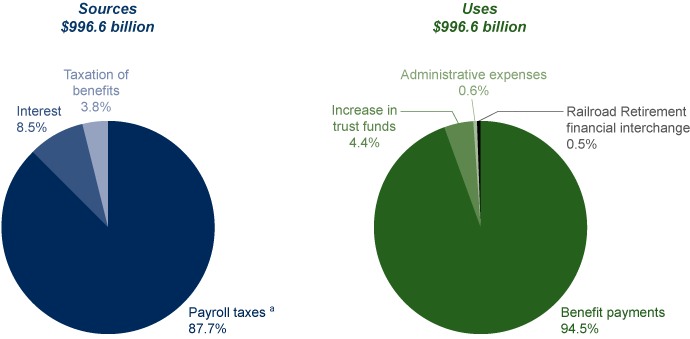
Social Security is largely a pay-every bit-you-get program. Almost of the payroll taxes collected from today'southward workers are used to pay benefits to today's recipients. In 2017, the Erstwhile-Age and Survivors Insurance and Disability Insurance Trust Funds collected $996.6 billion in revenues. Of that corporeality, 87.7% was from payroll revenue enhancement contributions and reimbursements from the General Fund of the Treasury and three.viii% was from income taxes on Social Security benefits. Interest earned on the authorities bonds held by the trust funds provided the remaining 8.five% of income. Assets increased in 2017 because total income exceeded expenditures for benefit payments and administrative expenses.
Sources and uses of Social Security revenues in 2017
SOURCE: 2018 Annual Report of the Board of Trustees of the Federal Old-Age and Survivors Insurance and Disability Insurance Trust Funds, Tabular array II.B1.
NOTE: Totals do non necessarily equal the sum of rounded components.
a. Includes General Fund reimbursements, which deemed for less than 0.ane% of Trust Fund income.
Social Security's Demographic Claiming
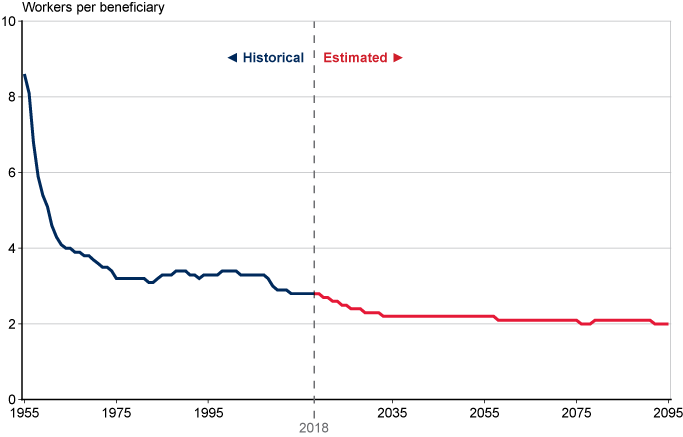
The 2022 Trustees Report projects that the number of retired workers will grow quickly, equally members of the postal service–World State of warIi baby boom go along to retire in increasing numbers. The number of retired workers is projected to double in about l years. People are also living longer, and the nascence rate is low. As a result, the Trustees project that the ratio of ii.8 workers paying Social Security taxes to each person collecting benefits in 2017 will fall to 2.2 to 1 in 2033. In 2010, taxation and other noninterest income did not fully embrace plan cost, and the 2022 Trustees Report projects that this pattern will go on for at least 75 years if no changes are made to the program. However, the Trustees also project that redemption of trust fund assets will exist sufficient to allow for full payment of scheduled benefits until 2033.
Ratio of covered workers to Social Security beneficiaries
SOURCE: 2018 Annual Report of the Board of Trustees of the Federal Old-Age and Survivors Insurance and Inability Insurance Trust Funds, Table Iv.B3 (intermediate assumptions).
The Long-Run Financial Outlook
Social Security is not sustainable over the long term at electric current benefit and tax rates. In 2010, the program paid more than in benefits and expenses than it collected in taxes and other noninterest income, and the 2022 Trustees Report projects this pattern to continue for the next 75 years. The Trustees estimate that the combined OASI and DI trust fund reserves will be depleted past 2034. At that signal, payroll taxes and other income will catamenia into the fund but volition be sufficient to pay only about 79% of program costs. As reported in the 2022 Trustees Report, the projected shortfall over the side by side 75 years is 2.84% of taxable payroll.
Social Security income minus costs every bit a pct of taxable payroll
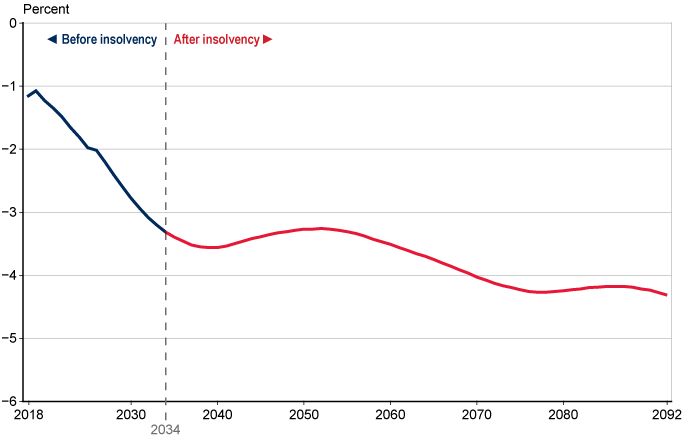
SOURCE: 2018 Almanac Written report of the Board of Trustees of the Federal Old-Age and Survivors Insurance and Disability Insurance Trust Funds, Table IV.B1 (intermediate assumptions).
wagneraboverpured.blogspot.com
Source: https://www.ssa.gov/policy/docs/chartbooks/fast_facts/2018/fast_facts18.html
0 Response to "How Much Can I Make on Social Security in 2018"
Post a Comment